






Stellant Systems: Heritage-Driven Innovation in Space
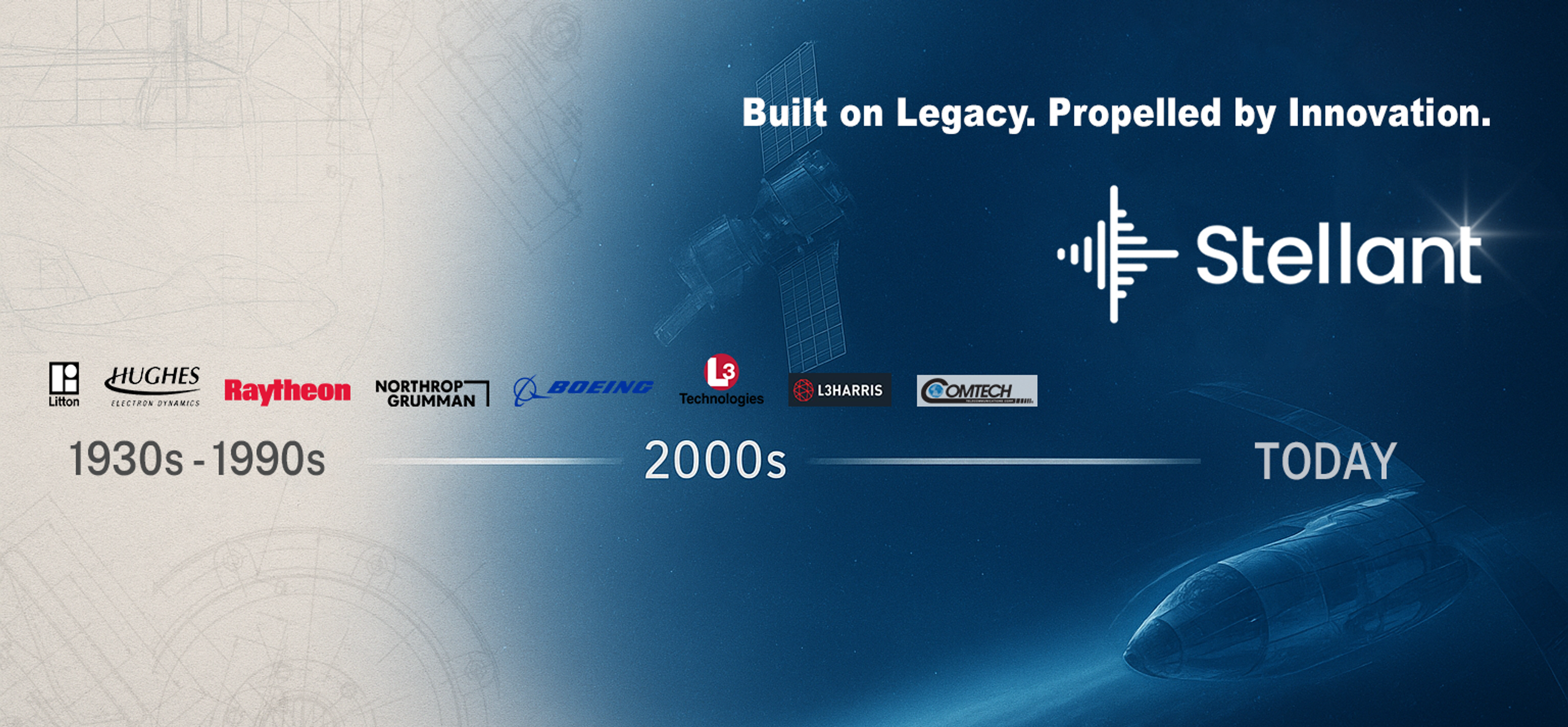
February 23rd, 2026Stellant Systems’ strength in space microwave power technologies is built on more than 90 years of heritage. Our space roots stretch back to the 1960s with the Hughes Microwave Tube Division and continue through the expertise gained from L3Harris and other legacy companies. All that history makes Stellant one of the most experienced in high-reliability microwave power solutions. With deep knowledge across vacuum electronics, solid-state power, and advanced manufacturing, we are able to solve today’s most complex space challenges and push forward technologies that will shape tomorrow’s satellite systems.
Heritage for the Next Generation
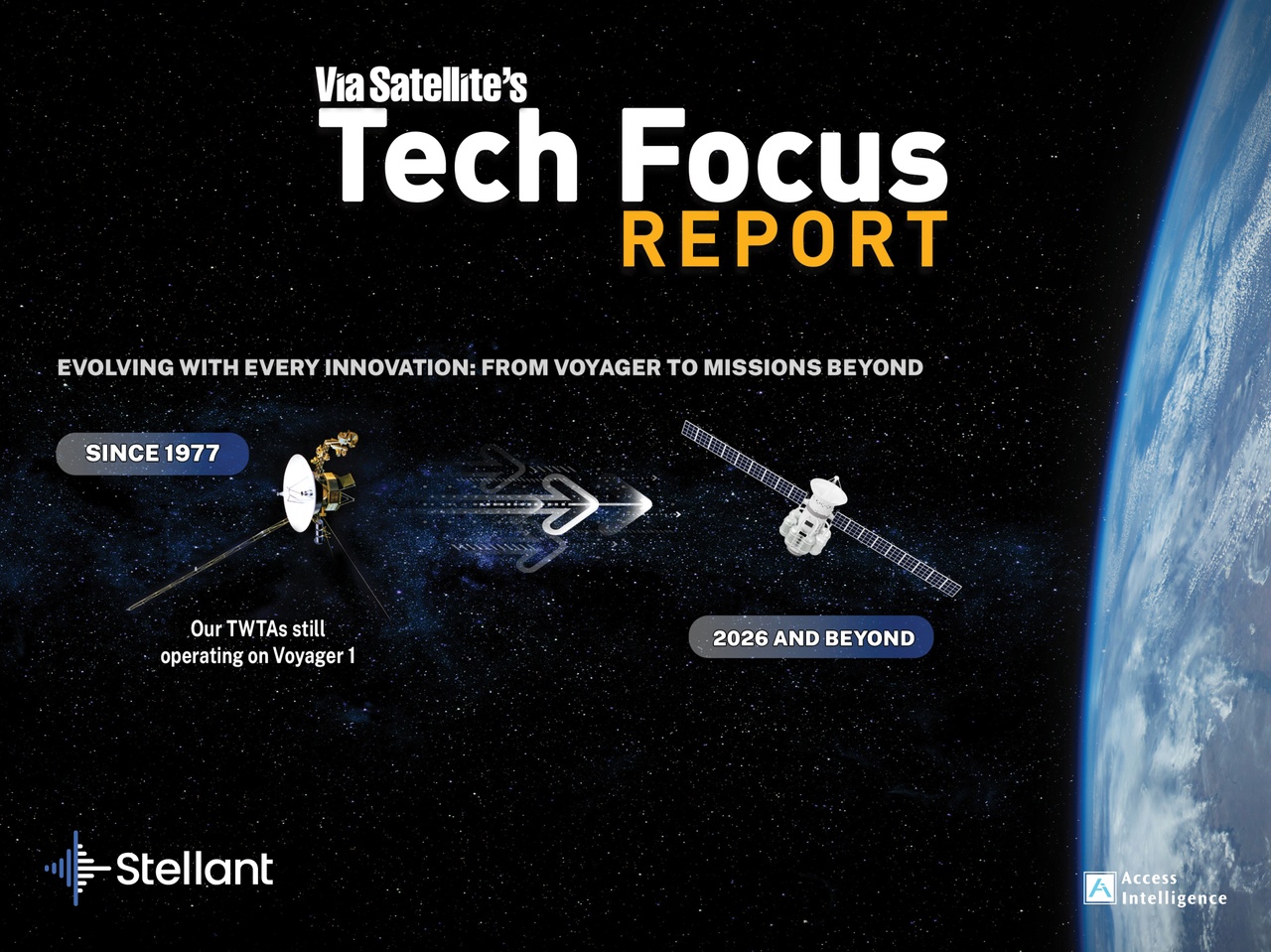
For decades, Stellant Systems has delivered thousands of space-qualified components, including subsystems that are still operating on orbit since 1977 on the Voyager mission. This history shapes every part of our design philosophy – from choosing the right screening levels for each mission to scaling production for today’s satellite constellations.
Stellant’s deep roots in space and defense brings a unique perspective on what matters: performance, durability and adaptability. These qualities are becoming more critical as satellite platforms move toward dynamic, software-defined architectures.
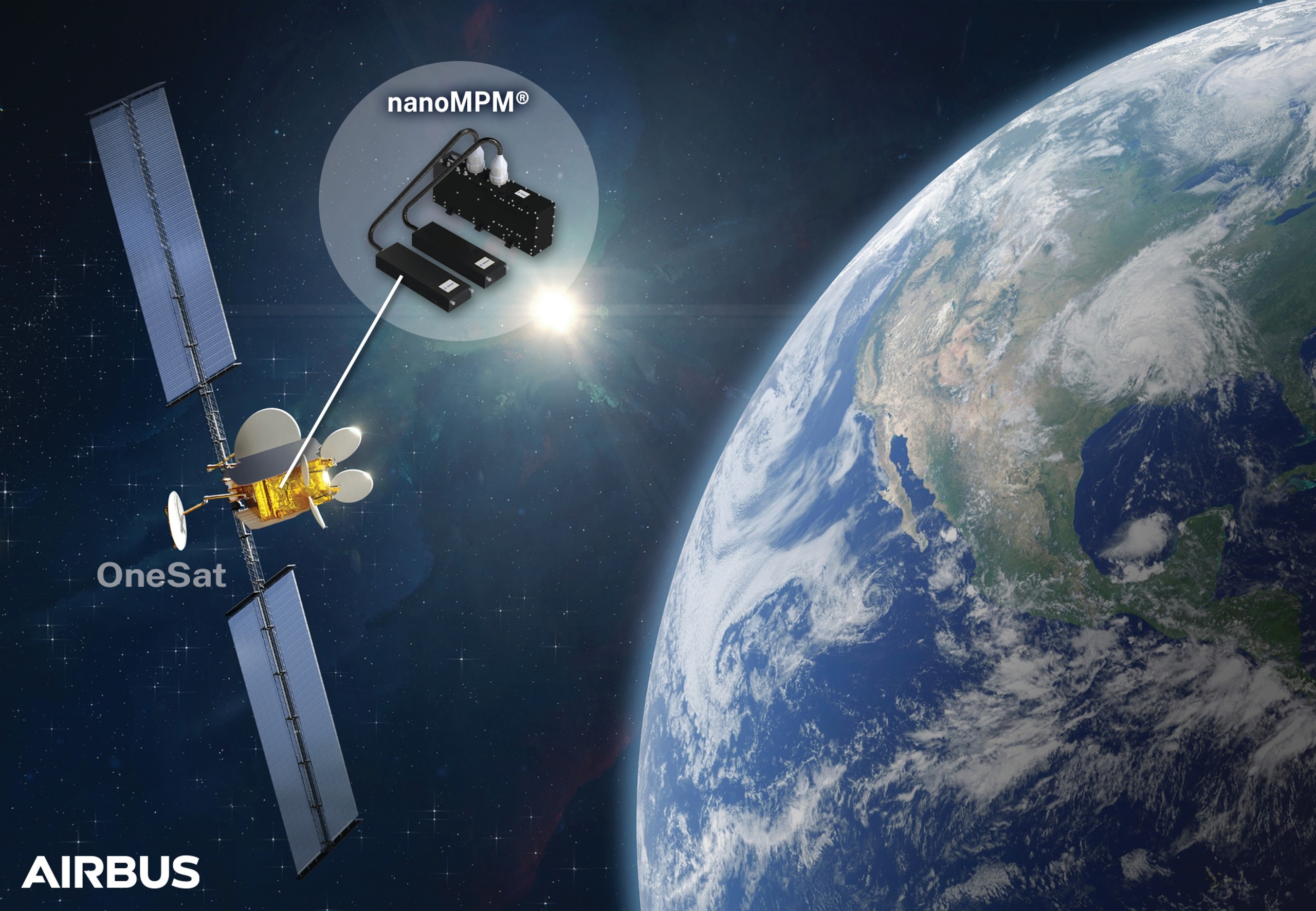
nanoMPM®: Redefining Power, Efficiency, and Flexibility in Space
Building on that foundation, our Quad nanoMPM® bridges a long-standing gap in the market – more power than SSPAs at high frequencies without the size and mass of a traditional LCTWTA. By bringing four linearized traveling‑wave tubes together in one compact module, the MPM delivers power, efficiency, and adaptability that simply was not possible before.
Key advantages the nanoMPM® brings:
• Fully digital control for real-time optimization
• Mission-configurable saturated RF output power for optimal performance
• Integrated quad linearizer within the Electronic Power Conditioner (EPC)
• Compact dual-TWT packaging optimized for phased-array architectures
• Modular, compact EPC capable of powering four TWTs
• Connectorized mating of dual-TWTs with EPC for ease of integration at the satellite level
• Simplified integration and manufacturing flow to support volume production
The nanoMPM®family is also expanding. With variants tailored for different frequency bands, power levels, and mission needs.
Today’s lineup includes:
Ka-band: 60 W saturated / 40 W nominal output. • Options for waveguide attachment, payload mating, and frequency bands
Ku-band: 80 W nominal / 40 W nominal output • Options for waveguide attachment, payload mating
Stellant has already shipped multiple nanoMPM® flight sets, including systems supporting Airbus’s OneSat program, showing both the maturity of the technology and scalability for next-generation missions.
Enabling Future Architectures: DigiFlex EPC (In Development)
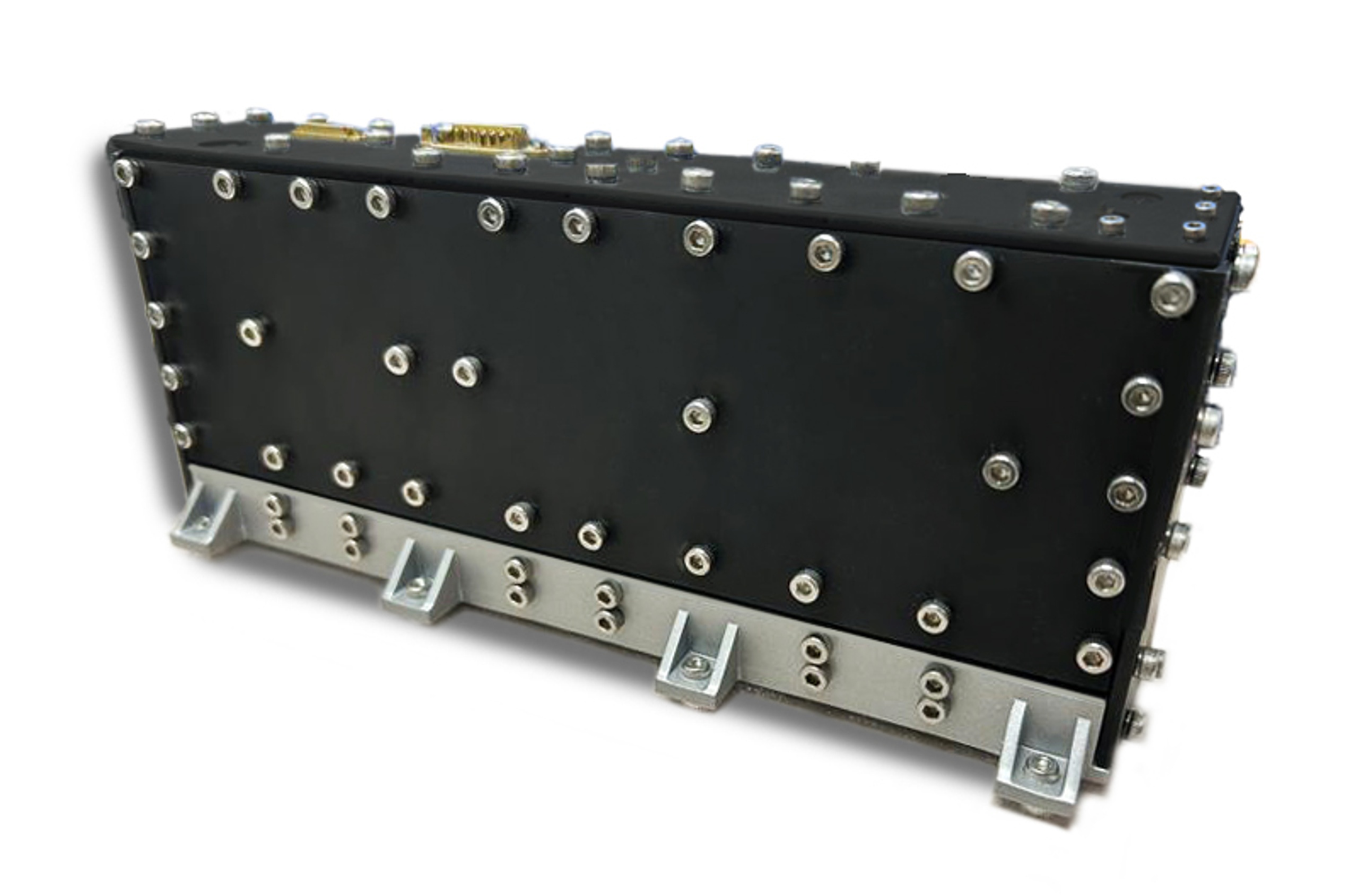
Stellant’s DigiFlex also builds on its deep EPC heritage. It is designed to offer new levels of flexibility without compromising the reliability and efficiency missions depend on. As a true drop‑in solution for L‑ through Q‑band payloads, DigiFlex gives satellite builders the adaptability needed as architectures become more dynamic.
DigiFlex features include:
• A modular EPC design that simplifies manufacturing
• Digital interfaces for greater on‑orbit configurability
• Support for multiple regulated bus voltages (50 V, 70 V, 100 V)
• Commandable control of cathode voltage, heater voltage, and RF output power for streamlined production
• Mission-configurable saturated RF output power for optimal performance
• Integrated linearization and gain control
• High efficiency (> 90%) and low mass (< 1500 g )
8 cm XIP Ion Thruster: Compact, High-efficiency, Precision Propulsion
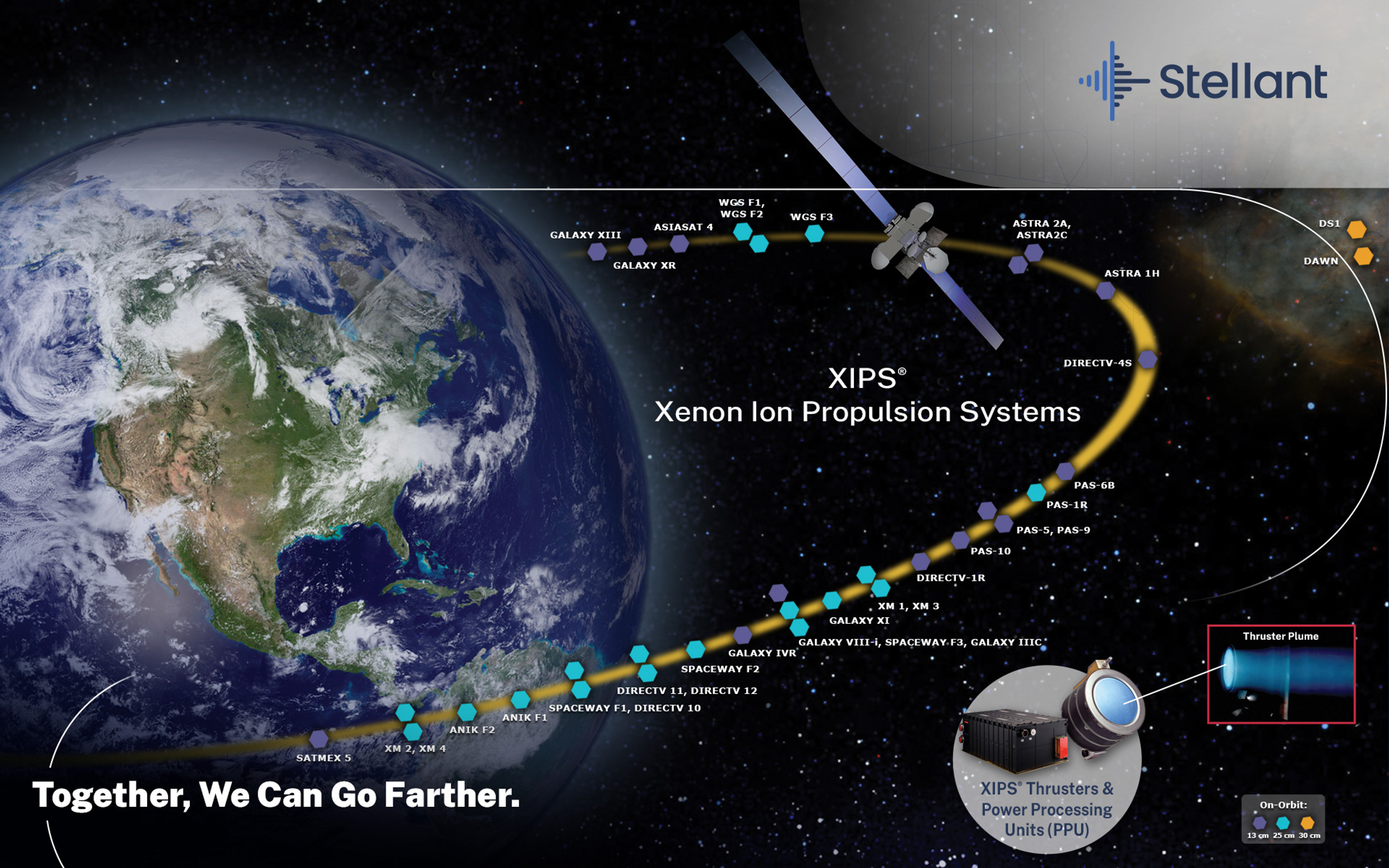
In addition to the nanoMPM® and DigiFlex, Stellant continues to develop the 8-cm XIP Ion Thruster for a broader range of small satellite missions. The design is lightweight, flexible, and maintains the same flight heritage of the 25-cm XIP thrusters. Stellant has been producing the ion thruster systems since 1990s, with ~228 delivered so far. Adding the 8 cm thruster system to Stellant’s portfolio provides low weight, high efficiency thrust option with proven reliability in the small satellite market.
The 8 cm thruster system features:
• 2 - 18 mN of thrust with either Xenon or Krypton gas, ideal for cost effective small sat missions
• High specific impulse similar to other grided ion thrusters for maximum usable payload mass
• Modernized power supply topology with digital interface
• Flow controllers and optional payload level items for ease of implementation
A Complete Portfolio for Next-Generation Space Systems
Stellant brings one of the broadest and most vertically integrated portfolios under one roof – TWTs, TWTAs, EPCs, LCAMPs, SSPAs, and propulsion technologies.
We are also the only provider that can fully design, build, integrate, test, and deliver complete space-qualified LCTWTAs in-house. With more than 3,500 all‑Stellant units on orbit from L‑ through V‑band—and new solutions extending into Q‑, V‑, and W‑band—we continue to support the growing bandwidth needs of next‑generation High Throughput Satellite systems.
Facilities and In-House Expertise
Stellant manufactures its space‑qualified products in Torrance, CA with additional non‑space production in Torrance, Williamsport, PA and Melville, NY. Key processes handled entirely in-house include:
• Cathode manufacturing and ceramic metallization
• Vapor deposition and wet chemical processing
• High-temperature brazing and hermetic sealing
• Advanced inspection (X-ray, SEM/EDX)
• Environmental, electromagnetic, and mechanical testing
This depth of internal capability — strengthened by the acquisition of Comtech PST — allows Stellant to tightly control quality, performance, and schedule while continuing to advance space power technology.