







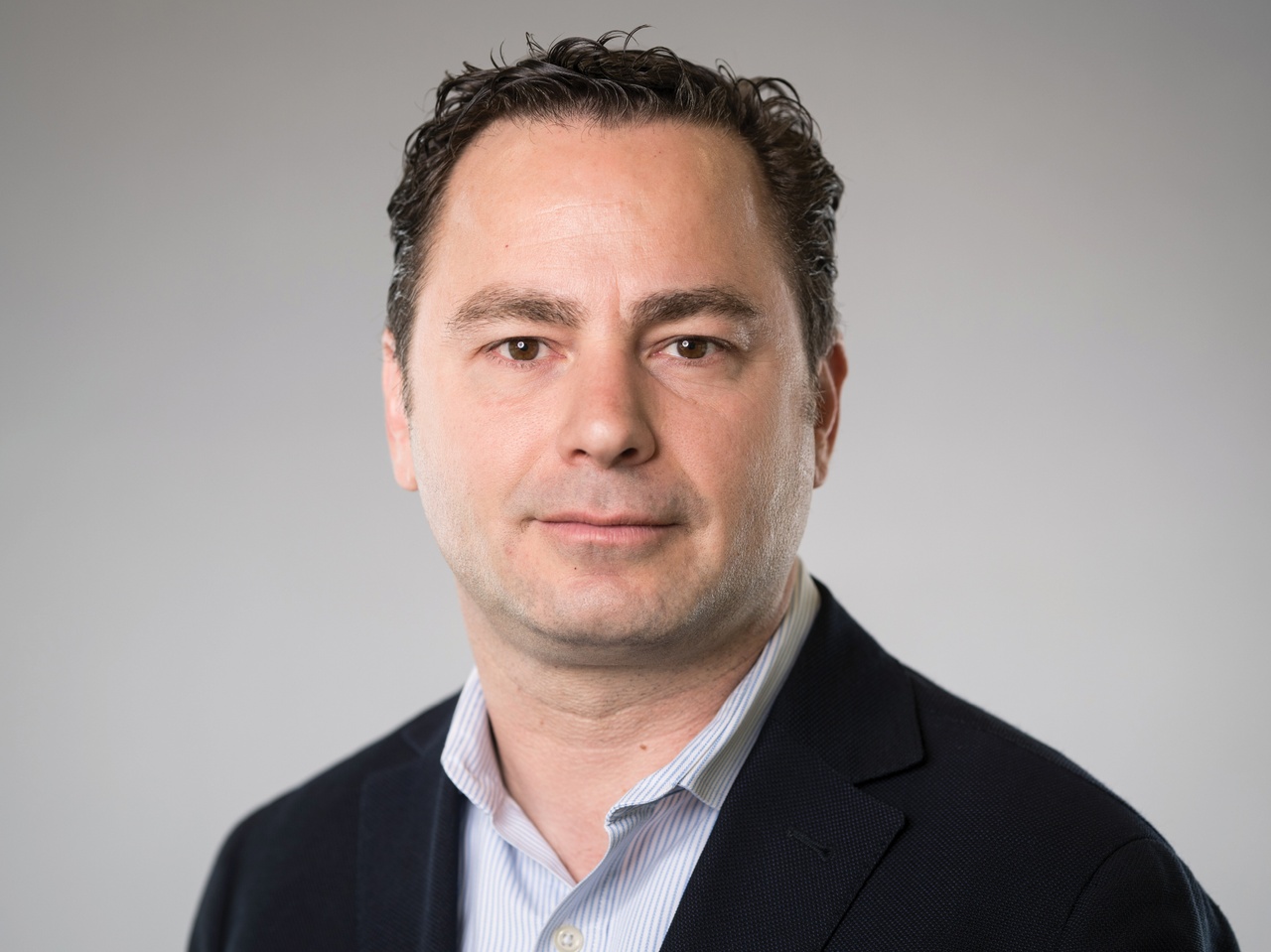
Rethinking the LEO Constellation: Massimiliano Ladovaz on SpinLaunch's Plans for Meridian Space
December 2nd, 2025
When SpinLaunch announced plans in April of this year to deploy Low-Earth Orbit (LEO) constellation Meridian Space, it raised eyebrows across the satellite industry. Why is the nonconventional launch startup going after broadband?
It only got more interesting when SpinLaunch brought industry veteran Massimiliano Ladovaz on board as CEO over the summer. The former CTO of OneWeb, Ladovaz led deployment of the constellation and then served as COO of Eutelsat/OneWeb Group, and has previous experience with SES and Inmarsat as well. In this interview, Ladovaz explains his decision to join SpinLaunch and how the constellation fundamentally rethinks the economics of LEO.
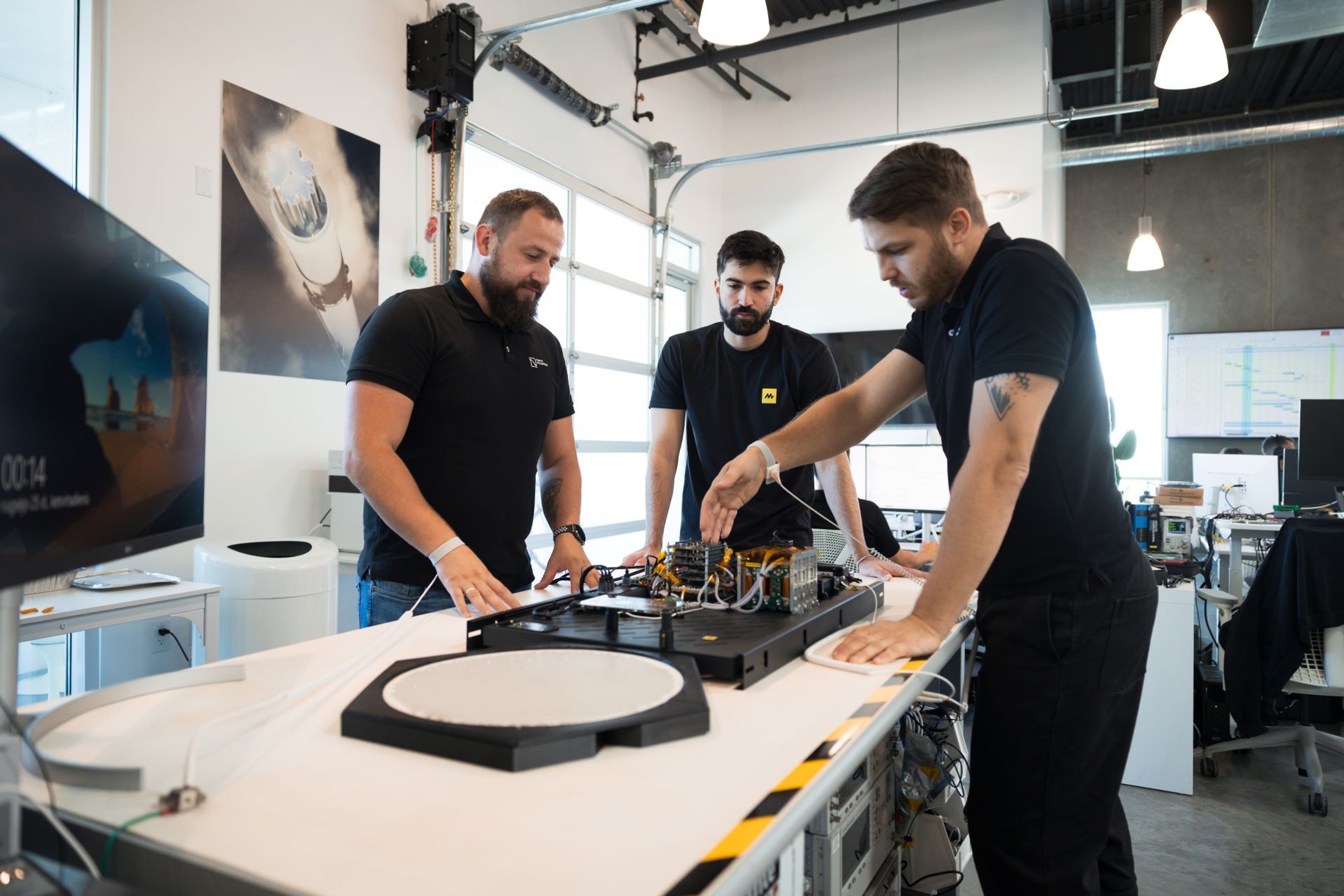
SpinLaunch is working with Kongsberg NanoAvionics on the constellation and recently announced that it completed a design review for the first customer link satellite, set to fly in October 2026.
VIA SATELLITE: What drew you to join SpinLaunch and Meridian Space?
Ladovaz: My story is quite interesting. I got a call for the CEO search and honestly at the beginning I said, ‘I’m not interested, I don't want to do another LEO constellation.’ I loved OneWeb, it was a fantastic experience — but another LEO constellation?
LEOs have one fundamental issue, that's CapEx. It’s very expensive on top of being complicated. The complex side, we can sort that out. But it's the money element that I was not convinced with. LEOs are for rich people, people with big pockets. There’s already Elon, there’s Amazon. But they were insistent.
Because I was curious, I looked at it. I started asking more and more questions, we spent quite a few months going into it. Everybody is about vertical integration — the only way to compete with SpaceX is by verticalizing. Yes, it's part of the problem, but good luck competing when Elon is way ahead. The main innovation from the team was the antenna. It’s completely disruptive, it allows you to make the satellite extremely small. We can launch an entire constellation on one traditional launcher.
VIA SATELLITE: One traditional launcher, like one Falcon 9? It sounds crazy.
Ladovaz: One global system into one launcher. It sounds crazy, but when I looked at the details, I couldn’t find a catch. We’ve tested the antenna. The payload — it’s so simple — it’s just a PCB [printed circuit board] and another piece of electronics. In terms of mass, in terms of cost, it’s a fraction of everybody else. The performance has been demonstrated.
We have secured the satellite bus contract with Kongsberg, and the cost of the satellite, the payload, and the launcher is defined. The cost of the space infrastructure is way cheaper than everybody else.
VIA SATELLITE: Was this antenna technology developed at SpinLaunch?
Ladovaz: The reflector array has been in the literature forever. If you are an antenna expert, you’ve studied reflector arrays. It’s interesting why the SpinLaunch team went in the direction they went. They hired their first satcom team member in 2020. Several years ago, they started working on how to tackle the problem of mass and cost. They took something that was studied in PhDs and books and turned it into a proper, performing solution. The antennas have been tested with NASA successfully and the flight model is supposed to be launched next year.
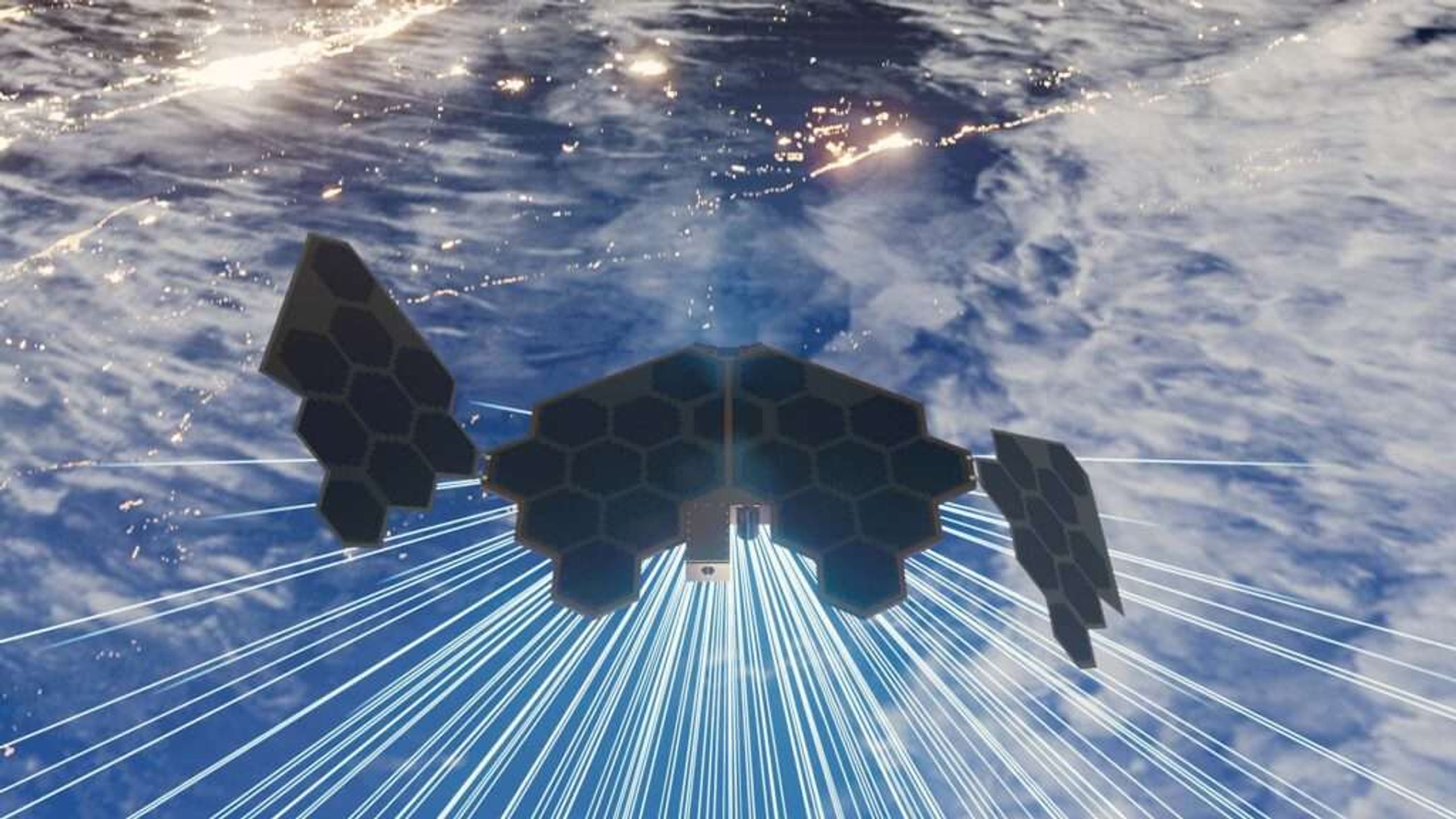
VIA SATELLITE: In the renderings I can see the satellite is primarily an antenna, and a small bus. The contract announcement for $135 million for 280 satellites — that’s not a lot of money for a satellite constellation. What becomes possible in terms of business model at that lower cost?
Ladovaz: People that couldn’t afford LEOs can do it, including regional operators, even governments. Governments need sovereign solutions. We hear about the IRIS² 10 billion budget — even governments struggle to find that amount of money.
We can provide solutions to sovereign governments or we can be an infrastructure provider to other systems. You see Kongsberg being one of our important shareholders, they are a major defense contractor. They see us being an infrastructure provider to their products. It's not another Starlink, not another OneWeb or Amazon, it’s being completely part of their solutions. They need a telecom system in order to support their infrastructure and that could be one layer of the Meridian constellation.
VIA SATELLITE: Do you see Meridian as having fewer customers, but those customers are more invested in the system?
Ladovaz: I’ve obviously been in this world quite a bit. The fewer customers, the better. In a good way, because you can then address their needs and it's a clean interface. Ideally, I’d love to sell one entire constellation to a sovereign government. Those discussions are ongoing and are resonating. Or [sell] a fraction of a constellation to a set of regional operators.
Regional operators today are in a very difficult position. Even bigger operators are struggling to close a business plan. It’s getting harder. Video is going to stay for a while. But in data, it's harder and harder because Starlink has done a fantastic job. Now distribution partners are switching off GEO [Geostationary Orbit] data communication and turning on LEOs. Data consumption is exploding, but mainly thanks to LEO and customers getting used to low latency. Every app that we use is designed on low latency. Customers don’t care if it comes from GEO or LEO, but they care about the quality of the service. LEO is providing a differentiator.
Regional operators could afford to buy LEO with a solution like ours because our system is perhaps the cost of a GEO network. Then it becomes interesting. We might have regional operators — one in Asia, one in South America, or Europe trying to split [a system].
I’ve been an operator. I’ve been on the OneWeb side, Inmarsat, I’ve been at SES. I’ve designed those systems, I know exactly what the cost points are. The struggle in terms of cost — either you go to a massive Starlink-like satellite in order to try to make up your cost per bit. That's what people are trying to do. It’s very difficult to sell that amount of capacity and it’s very difficult to finance. Our solution looks at it differently. Very cheap, scalable. You want more capacity? Launch more of these. That’s why I’m quite excited.
VIA SATELLITE: Tell me more about the technology. What spectrum will it operate in?
Ladovaz: People are obsessed with the space segment and it’s usually a mistake. It’s true most of the money is usually spent on the space segment. There is an entire element on the ground. Our first system is going to be in Ka-band, but we have spectrum filings in Ku- and Q- and V-band. The same IP we are doing in Ka-band, but we could do it in Ku-band, or any other frequency including low frequency for direct-to-device — but that’s a different conversation.
VIA SATELLITE: How does 5G NTN [non-terrestrial network] come into play?
Ladovaz: The other thing that as an industry in my opinion we have managed the wrong way is everyone [building] proprietary solutions and closed systems. Everyone has a closed system. I tried with OneWeb to have an open system, but we ended up closed for a number of reasons. At the time, the NTN discussions were not mature enough. But now thanks to AST SpaceMobile, Starlink Direct-to-Cell, the NTN specification and standards are really getting alignment between telecom and satellite.
I strongly believe and the idea before I joined SpinLaunch is that our waveform, our solution should be native 5G NTN, as open standard as possible, because we want to be an infrastructure provider. The last thing we want to do is something that’s closed. Ideally, the differentiation will be at a product level, not on the waveform. As long as you have a 5G modem, you could connect to our system. Hopefully everyone is going that direction. This means that our architecture is fully transparent. We could run other waveforms, but our baseline is 5G NTN.
VIA SATELLITE: Do you have user terminals in development at this stage?
Ladovaz: There is additional IP and differentiation on the ground side. We have some special orbits that are quite interesting because they allow us to drastically reduce the cost of the ground segment. The orbits allow the ground segment to be extremely compact. You could put a gateway in a 1,000 square foot area — this is way smaller than others out there. Having deployed ground, I know how complicated it is to find greenfield. Our gateway could be deployed on the roof of a data center. To be fair, it’s not too different from what SpaceX has been doing, but we believe that our solution is even cheaper.
VIA SATELLITE: What do you mean by special orbits?
Ladovaz: It's basically a fixed track orbit that has been used in imaging satellites. The satellite comes back to exactly the same point every so many hours. The advantage of that is the user terminals or gateways only have to scan in one direction. In traditional LEOs, the satellite could be in a different direction and it makes it way more complicated. The gateway is nearly as simple as a GEO terminal and extremely cheap.
For mobility, I don't want to start investing and building user terminals because there are other people that are very good at that. We provide systems to our customers and they probably have a deployed base they’ve spent millions on terminals. We can connect to virtually any LEO tracking user terminal because of the 5G open architecture.
VIA SATELLITE: Starlink has a dominant position in the broadband constellation market, but you think there are ways around that for customers that can't afford Starlink?
Ladovaz: Who can’t afford Starlink or don’t want Starlink. Our cost proposition is probably comparable to Starlink. If people just want to go just for super cheap, I suspect they might just keep buying Starlink. Clearly, they are other customers that don’t want Starlink. All those regional operators, it’s a matter of survival unless they become a reseller of Starlink. What is the future, reselling Starlink, or reselling their own products? That’s the question they need to ask.
We are providing sovereign solutions to those customers, sovereign governments and regional operators. And for big operators that are trying to tackle Starlink, with us they will have an infrastructure that is way cheaper to what they have today, and they can build their own products on top of it and compete.
Unfortunately, the tendency of everyone is to copy Starlink and be vertically integrated. Yes, you can reduce cost, but I think Starlink will still be ahead of everyone in that game. You need to find a different technology base.
VIA SATELLITE: We’re talking about Meridian Space, but what about SpinLaunch? What is the latest on the launcher development?
Ladovaz: The launcher has been demonstrated 10 times successfully. There is a lot of IP in order to demonstrate that launch. The next step is to fund the bigger, orbital accelerator. The revenues from Meridian will fund the accelerator. The cost of that launcher is again, a fraction of any traditional launcher. Everybody else is trying to copy Elon — good luck. You have to look at the problem in a different way.
In terms of steps, first Meridian, then we fund the accelerator. That accelerator has a lot of features on top of cost that are quite interesting for launching constellations. For replacing satellites, you can launch exactly on the orbit you want, and the time to service is practically zero. This being said, we still have some work on it. We are working with some partners. This is one of the largest vacuum chambers in existence, and you know hypersonics is a hot topic. Without getting too into details, people are quite interested in doing some testing and work on that aspect. VS